
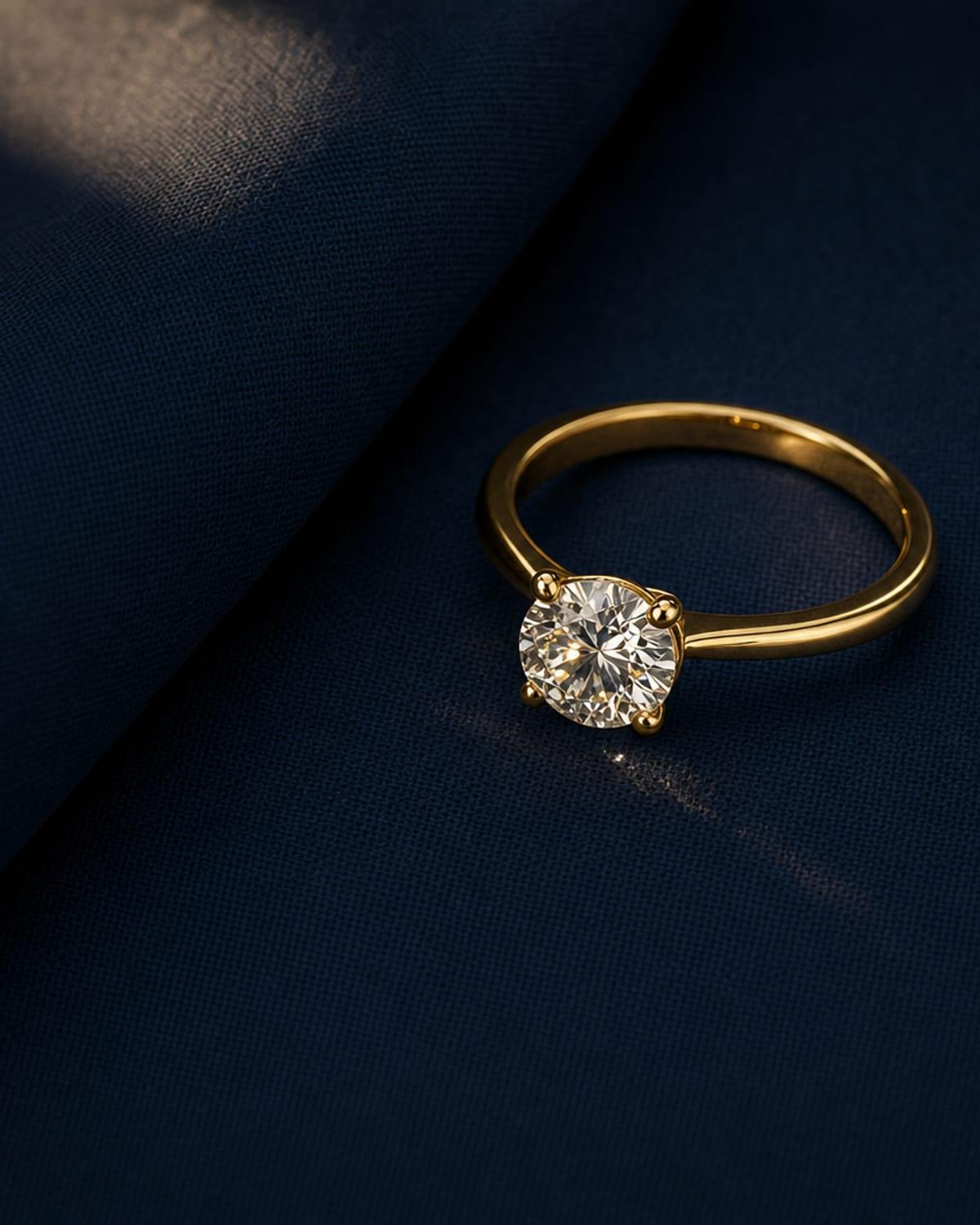
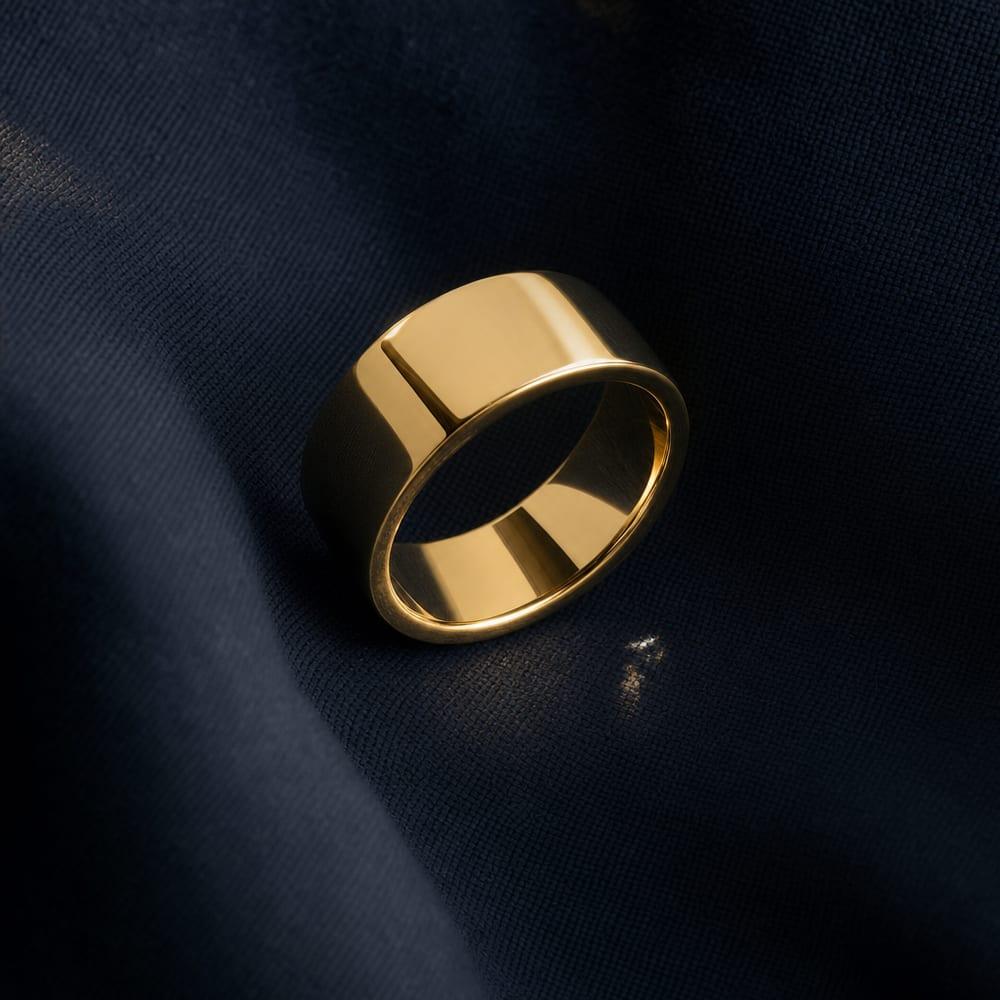
Yellow gold is pure gold alloyed with small amounts of silver and other metals, such as copper and zinc, to make it hard enough to wear while keeping its natural warm colour. Unlike white gold, it needs no plating. At Savoir-Faire Jewellery we make yellow gold rings in 9ct, 14ct and 18ct, and 18ct yellow is our lowest-priced 18ct finish for engagement rings.
This guide goes deeper on yellow gold than our gold vs platinum guide, which compares all four metals.
How is yellow gold made?
Pure gold is melted with other metals to make an alloy that is hard enough for a ring. Pure 24ct gold is too soft to wear every day: it scratches and bends easily. The "ct" on gold measures purity out of 24 parts, which has nothing to do with the "ct" on a diamond, which measures weight.
| Gold | Pure gold | Hallmark | Colour |
|---|---|---|---|
| 24ct | 99.9% | 999 | Too soft for rings |
| 18ct | 75% | 750 | The richest, warmest yellow |
| 14ct | 58.5% | 585 | A slightly softer yellow |
| 9ct | 37.5% | 375 | A paler yellow |
Here is something most people don't realise: the same ring weighs more in 18ct than in 9ct, because higher-purity gold is denser. So moving from 9ct to 18ct doesn't just double the share of gold; it also puts more metal into the same shape. That is why the same heavy men's band in 9ct costs less than half its 18ct price.
18ct vs 14ct vs 9ct yellow gold: which should you choose?
Choose 18ct for colour, 14ct for everyday toughness, and 9ct for the lowest price. None of them is a quality tier; they are different trade-offs.
- 18ct has the richest, warmest yellow. It is the softest of the three, so it suits colour-led choices and rings worn gently.
- 14ct is about 10% harder than 18ct, which you notice over years of daily wear. It suits hands-on work, an active life and a tighter budget, with a colour that is still clearly yellow.
- 9ct is the most affordable, with a paler colour. It makes the most difference on heavy designs, such as wide men's bands, where purity moves the price furthest.
If you are deciding between a bigger diamond and a higher purity, it is often worth choosing 14ct instead of 18ct and putting the saving into the stone.
Does a white diamond look yellow in yellow gold?
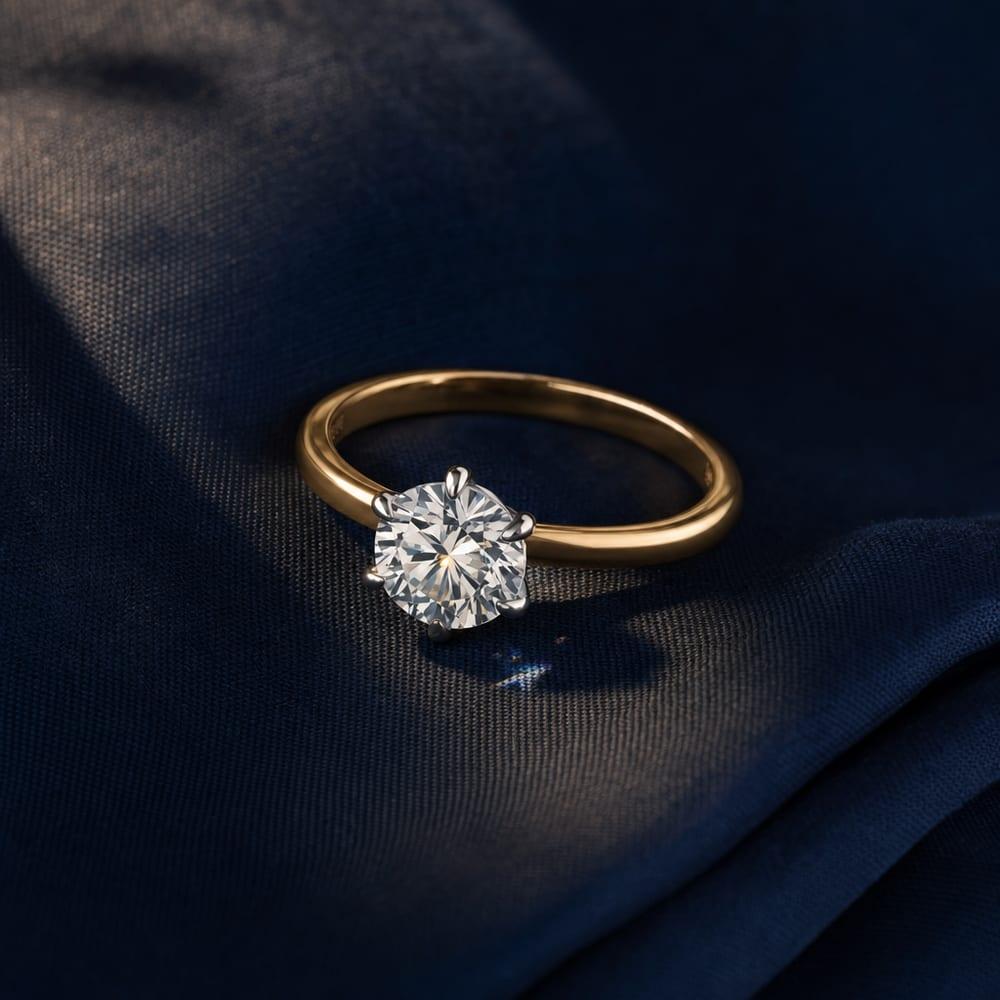
No. A white diamond stays white; what changes is the metal around it. The claws are part of what you see when you look at a ring, and some people prefer their diamond framed in white metal while keeping a warm band.
That look is available. Our Zendaya is offered with a white gold head on a yellow gold band, so the diamond sits in white claws while the band stays warm. Ask us about the same look on other designs. Our guide to the 4Cs covers choosing the diamond itself.
Why has gold got more expensive?
Because the gold price itself has risen sharply. Spot gold sat near US$2,658 an ounce in early 2025, peaked above US$4,600 in January 2026, and traded near US$3,985 in mid-July 2026. In Australian dollars it has traded around $185-$190 a gram in 2026. Gold has cost more than platinum since 2015.
Two things follow for a ring buyer:
- Metal weight now moves the price more than it used to. Metal-heavy designs such as bezels and wide bands have gone up, even as lab-grown diamonds have come down.
- The metal is now a bigger share of the budget. With lab-grown centre stones far cheaper than a few years ago, purity and design weight deserve more attention than they used to.
Our note on rising gold prices in Australia goes into the detail. Within our own range, 18ct yellow gold engagement settings cost slightly less than 18ct white gold, which carries the cost of rhodium finishing, and we price platinum the same as white gold.
How do you look after yellow gold?
Very little: yellow gold never needs re-plating, and scratches polish out. The trade-off is that gold loses a tiny amount of metal each time it is scratched or polished, so a gold ring thins very slowly over decades.
The claws holding a diamond wear the same way, so have them checked every three to six months on an engagement ring worn every day. Our jewellery care guide covers cleaning at home and what to leave to a jeweller.
Yellow gold wedding bands and men's rings
For our wedding bands, yellow, white and rose gold all cost the same at the same purity, and every band comes in 9ct, 14ct or 18ct gold or platinum. Men's bands carry about three times the metal of a slim women's band, so for men, the choice of purity matters most.
If you will wear your engagement ring and band together, match the metal: a harder ring slowly wears down a softer one where they rub. See women's yellow gold wedding rings, men's gold wedding rings, and our yellow gold engagement rings.
Common questions
Is 9ct gold real gold?
Yes. 9ct gold is 37.5% pure gold, stamped 375. It's paler and lower-priced than 14ct or 18ct, and it suits heavy designs such as wide men's bands, where purity moves the price most.
Is 18ct or 14ct yellow gold better?
Neither is better. 18ct has the richest colour but is softer; 14ct is about 10% harder and costs less. Choose 18ct for colour, 14ct for a ring worn every day through hands-on work.
Does yellow gold need re-plating?
No. Yellow gold is the colour of the metal itself, so there's no plating to wear off. Only white gold is rhodium plated. Scratches on yellow gold polish out.
Is yellow gold cheaper than white gold?
Slightly, for our engagement settings: 18ct yellow gold costs a little less than 18ct white gold, which carries the cost of rhodium finishing. Our wedding bands cost the same in yellow, white or rose gold.
Why do gold rings cost more than they used to?
The gold price has risen sharply, peaking above US$4,600 an ounce in January 2026. Rings with more metal, such as wide bands and bezel settings, feel it most.
Yellow gold is the classic for a reason: warm, low-maintenance and easy to wear. See it in finished designs among our yellow gold engagement rings, or book a free consultation in Melbourne or by video to compare 18ct and 14ct side by side.